Ask 200 buyers.Meet 100.Own the room.
A four-month market study and lead generation campaign, then the conference your market asked for. You get the leads, a state of the market report with your name on it, and first option on the event.
We’ve turned the conference upside down.
For years, conferences have been built for sponsors, then sold to buyers. Stands are sold before anyone knows who’s coming, and the buyers you wanted are somewhere else. We start at the other end. Senior buyers design the event they would actually want to go to, before a single sponsor is approached.
What the buyers decide
- Where it is
- When it is
- Overnight or not
- The evening
- The topics
- The speakers
- The sponsors they want to meet
- Which colleagues come
The result: an event buyers chose to go to, and sponsors who know exactly who’s in the room before they commit.
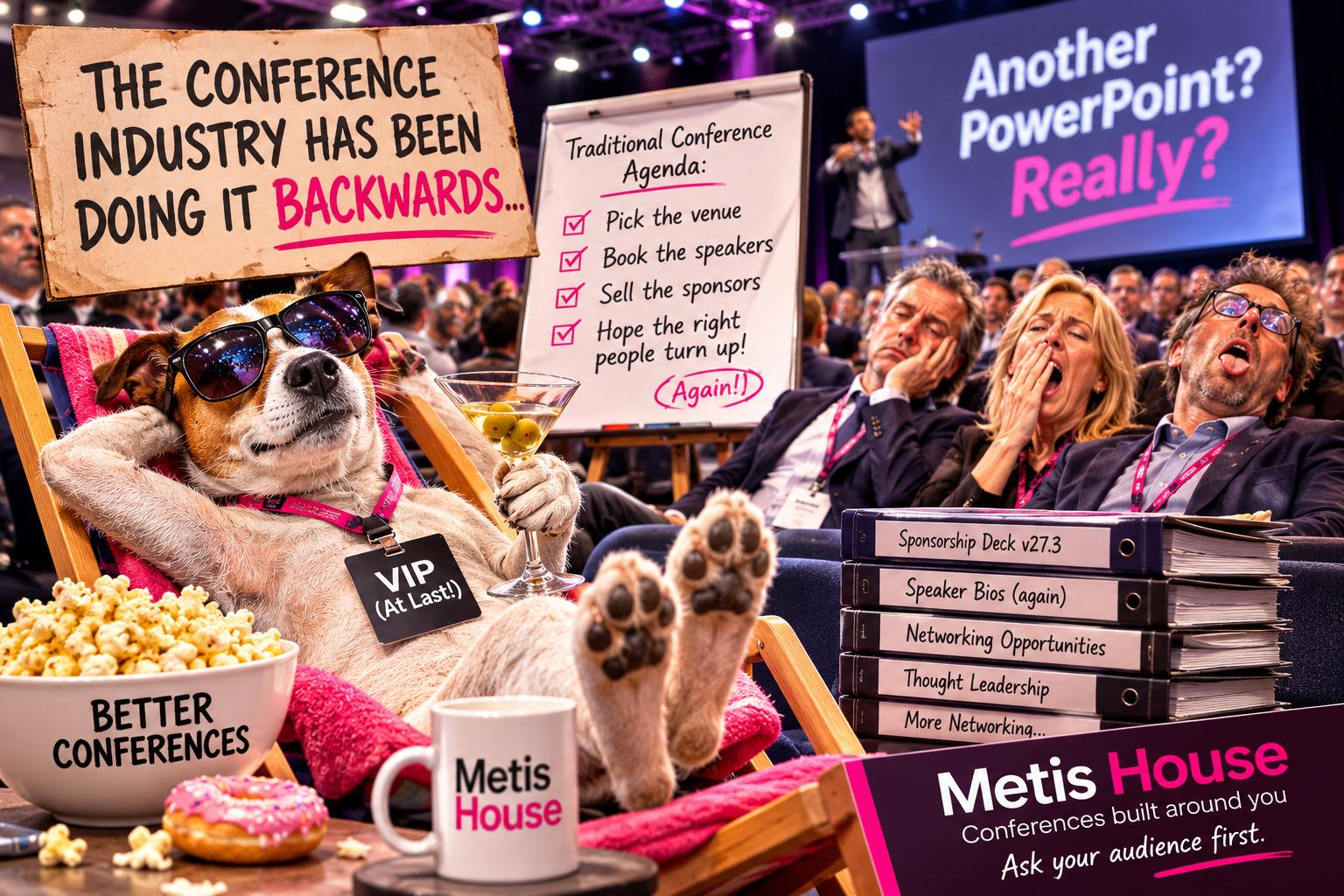
Be more Kevin.
Kevin asked the buyers what they wanted before he paid for anything. Now he’s the most relaxed sponsor at the conference.
Read the video instead
POV: you paid £20,000 to sponsor a conference. Meet your target buyers, asleep in session 14 of 31, slide 1 of 94. The traditional agenda: pick the venue, book the speakers, sell the sponsors, hope the right people turn up. Step 4 is doing a lot of heavy lifting. Sponsorship deck version 27.3. Number of buyers asked what they actually wanted: none. Meanwhile, this is Kevin. Kevin asked 200 buyers what they wanted before he paid for anything, and knew who was coming before he bought a stand. Kevin’s method: ask 200 buyers what they want, build the conference around their answers, sell the stands when 100 say yes. Kevin also got the leads, a market report with his name on it, and first option on the room. Kevin is now insufferable. Don’t be the delegates. Be more Kevin.
Four questions to ask before you sponsor any conference.
Whoever you sponsor with, ask the organiser these first. If the answers are vague, you’re not buying access to buyers. You’re buying a stand and hope.

- 1
How many delegates are registered today, and what are their job titles?
- 2
What did those buyers say they want to hear about?
- 3
Who else shares their buying decision, and are they coming too?
- 4
What happens if the right people don’t turn up?
Every Metis House conference answers all four before you buy a stand.
Phase one: the market study
Four months. Two dedicated people. Around 200 conversations with senior buyers in your market. It’s where every conference starts, and it’s worth having even if the conference never happens.
Leads
Around 100 senior buyers committed to attend, plus introductions to every buyer who welcomes contact from you. Each one comes with an info pack, so you know what they need before you speak.
A state of the market report
Built from around 200 conversations: budgets, buying cycles, approval routes, and what buyers really think of the suppliers in your market. Your name is on it as research partner.
See an example reportOption on the conference
The right to lead the conference built from the findings, shaped with you so it’s something the market actually wants to hear.
Targets of around 100 committed buyers and 200 conversations depend on the size of your market. We agree them with you before we start.
The report that makes you the voice of your market.
Two hundred conversations become a state of the market report, the kind of study buyers, analysts and the trade press take seriously. Your name is on the front. The headline findings become a white paper that fills the room for the conference.
Figures from the example report, a fictitious market invented to show the depth you’d receive.
What buyers plan to spend, how long they take to buy, who signs it off and where deals stall.
Which suppliers they know, how they see them, and what would make them switch.
The headline findings, published on LinkedIn and your own channels, put you at the centre of the conversation.
Financial services, 6,200 staffRecorded with permission
SUMMARY OF A 31-MINUTE CONVERSATION
- Piloting on two floors. Turnaround down from nine minutes to three.
- Pilot has no agreed end point. Finance asking what success looks like.
- Would switch supplier for quieter units and a proper security pack.
- Agreed to share. Contact welcome next month. Will attend, with a colleague.
Phase two: the conference, shaped with you
With the findings in hand, we shape the conference with you so it’s something the market wants to hear. Then you choose how to run it.
The whole room is yours
For a business that wants its own industry conference.
Your name on the conference, your agenda shaped with us from the findings, and every meeting in the room with you. The buyers come because the programme is what they asked for, not because it’s a sales pitch.
- Your name on the conference and the white paper
- Every booked meeting is with you
- The agenda and speakers the buyers asked for
- Full delivery: planning, programme, logistics, delegates and AV
- A pipeline report 90 days after the event
You lead. Partners share the bill.
For a business that wants to lead the conversation and share the cost.
You lead the conference and shape the agenda. We invite non-competing sponsors, guided by the suppliers buyers said they wanted to see, one per category. They pay for their place, so a bigger event costs you less.
- Lead sponsor billing and the opening slot
- First pick of meetings
- Partner sponsors share the cost, one per category
- Part of your phase one fee credited against your sponsorship
- A version that fits public sector procurement and anti-bribery rules
A conference with a show floor
For a market where buyers want to see the products.
The conference runs as normal, with an exhibition alongside. Simple pre-built stands let more suppliers be present without crowding the booked meetings, and buyers get to see and try what they’ve been reading about.
- Lead sponsor and partner sponsors as before
- An optional exhibition area with pre-built stands
- Booked meetings kept separate from the show floor
- Exhibitors chosen from the suppliers buyers asked to see
- More income from the event, so less cost for the lead
Not the funder? Once the buyers have committed, you can join the conference as a sponsor or exhibitor and see who’s coming before you sign.
What clients say.
We learned more about our market in four months than in the previous four years. And we were meeting buyers before our competitors knew the research existed.
The info packs changed how my team sells. They walked into every meeting already knowing the problem, the budget and who else had to say yes.
For once, a conference built around what I actually needed to hear. I brought my finance director, and we left with a shortlist.
Built for people who don’t like networking
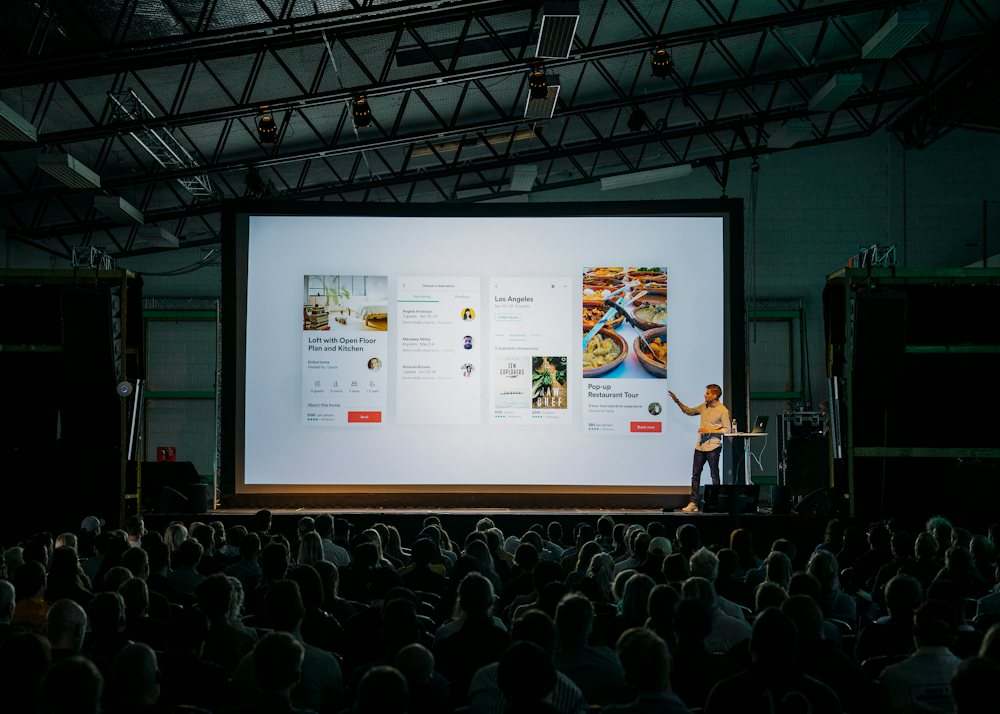
Senior people don’t mind talking. They mind walking up to strangers with no reason to be there. Because we asked the buyers first, every conversation starts with a reason, and the speakers are the ones they asked for.



- Seated dinner with a planThe table plan goes out in advance, with one line on why each person is sat there.
- Entertainment they chosePicked from what the buyers told us they’d enjoy.
- We open with the resultsWhat everyone in the room told us. Where they agree, and where they don’t.
- Buyers on stageShort addresses from the buyers who offered, and the voices they asked to hear.
- Booked 20-minute conversationsArranged in advance, with the info pack in your hand.
- Introductions with a reason“You both told us procurement delays are your biggest headache.”
- Small roundtablesEight people, one topic from the research, chaired by a respected peer.
- Room to step backA quiet room, good coffee and a clear finish time.
One contract. Every team you need.
Everything it takes, from the first buyer conversation to the last car home, run by Metis House under one contract.
What would it be worth to you?
Your numbers, not ours. Move the sliders to see what a set of held meetings with senior buyers could mean for your pipeline.